There is no single perfect emergency kit for every Australian household. A high-rise renter in Melbourne, a family in cyclone country and a remote property have different risks.
There is still a useful common starting point.
Water
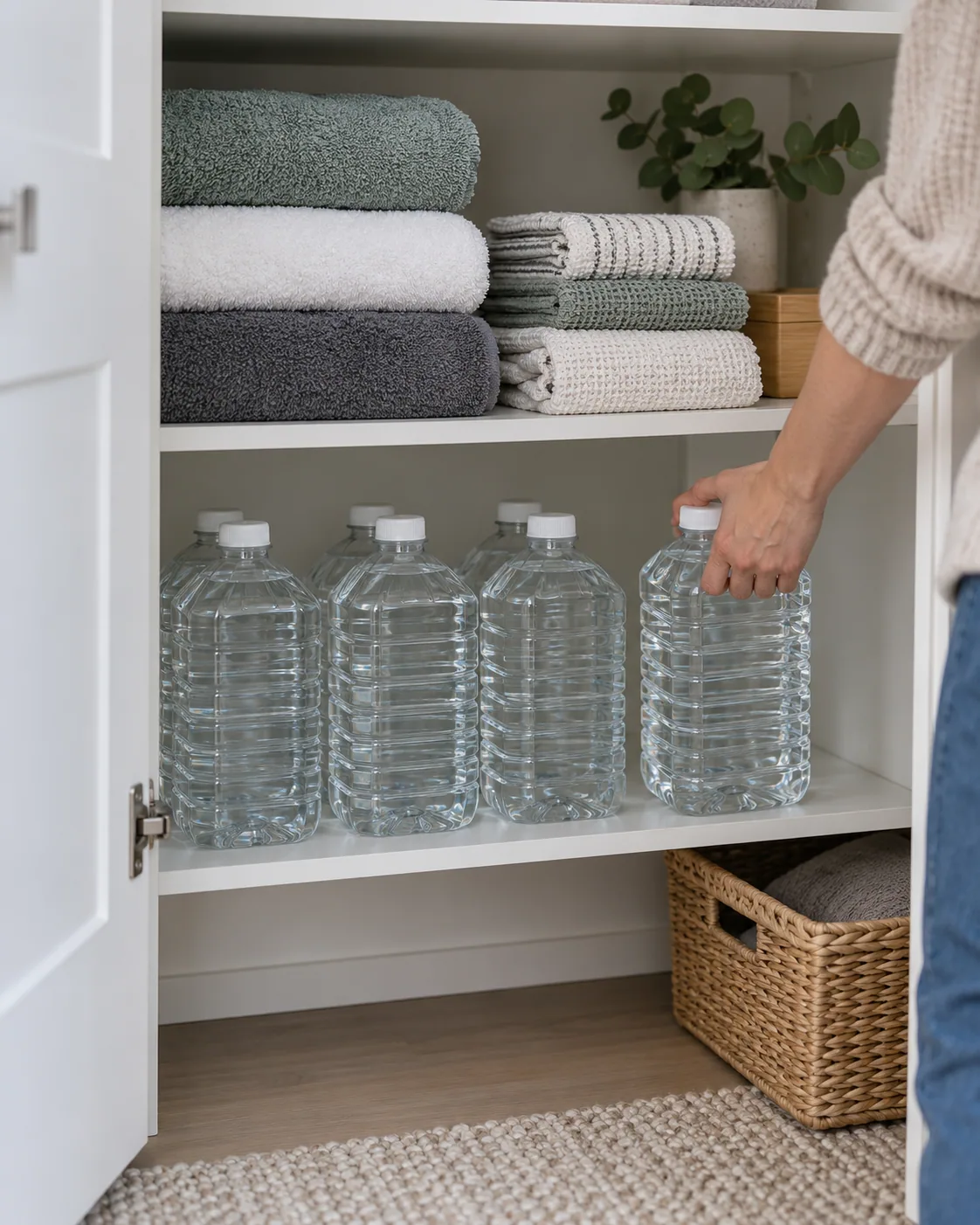
Get Ready Queensland currently recommends at least 10 litres of drinking water per person as a three-day minimum. Other Australian guidance may use different amounts or longer durations.
Store water safely, check container guidance and plan for every person. Pets, food preparation and hygiene add to the requirement.
Our practical suggestionWork out the household total before shopping. A neat apartment solution might look different from storage in a garage. The right reserve is one you can store, rotate and access.
Food
Choose food everyone will actually eat. Prioritise items that are shelf-stable and need little or no refrigeration, cooking or extra water.
A manual can opener matters if your plan includes tins. Baby food, formula, allergies and other dietary needs require household-specific planning.
Do not create a second strange diet just for emergencies. Rotate useful food through the normal pantry.
Light and power
Include working torches or lanterns, suitable spare batteries, charged power banks and the cables your devices need.
A phone is useful, but using it as your only torch drains the same battery you need for communication and information.
Test everything. A torch somewhere in the house is different from a torch that works and can be found in the dark.
Information
Australian Red Cross lists a battery or wind-up radio as a survival-kit item. A radio provides another way to receive information if mains power, mobile data or internet access are affected.
Write down trusted local stations, warning services and emergency contacts.
Health
Keep a basic first-aid kit accessible and in date.
Plan for essential medication and medical supplies with a pharmacist, doctor or relevant health professional. Do not rely on generic internet advice for temperature-sensitive medicines, powered medical devices or individual continuity needs.
Documents, cash and contacts
Keep protected copies of important documents and a written contact list. Australian Red Cross also includes cash in its packing checklist.
The amount of cash depends on household needs. The point is a modest backup if EFTPOS or ATMs are unavailable, not a large sum stored insecurely.
Household plan
Everyone should know:
- how to contact each other
- where to meet if separated
- who the out-of-area contact is
- what leaves during an evacuation
- where the kit and key documents are
- who is responsible for children, pets and support needs
Pets
Plan food, water, medication, identification, records, leads, carriers or crates. Check whether local evacuation arrangements accept animals and identify alternatives.
Store and review
Keep supplies somewhere safe and accessible. Australian Red Cross recommends reviewing its kit at least annually, while Get Ready Queensland material encourages regular checks and replacement of used or expired items.
Official guidanceUse the current checklist for your state, territory and local hazard.
Our practical suggestionPut a six-month reminder in the calendar. Test lights, recharge power banks, rotate food and water, update contacts, then stop thinking about it until the next review.
Sources
General information only. Follow official emergency instructions. Requirements vary by household and emergency.