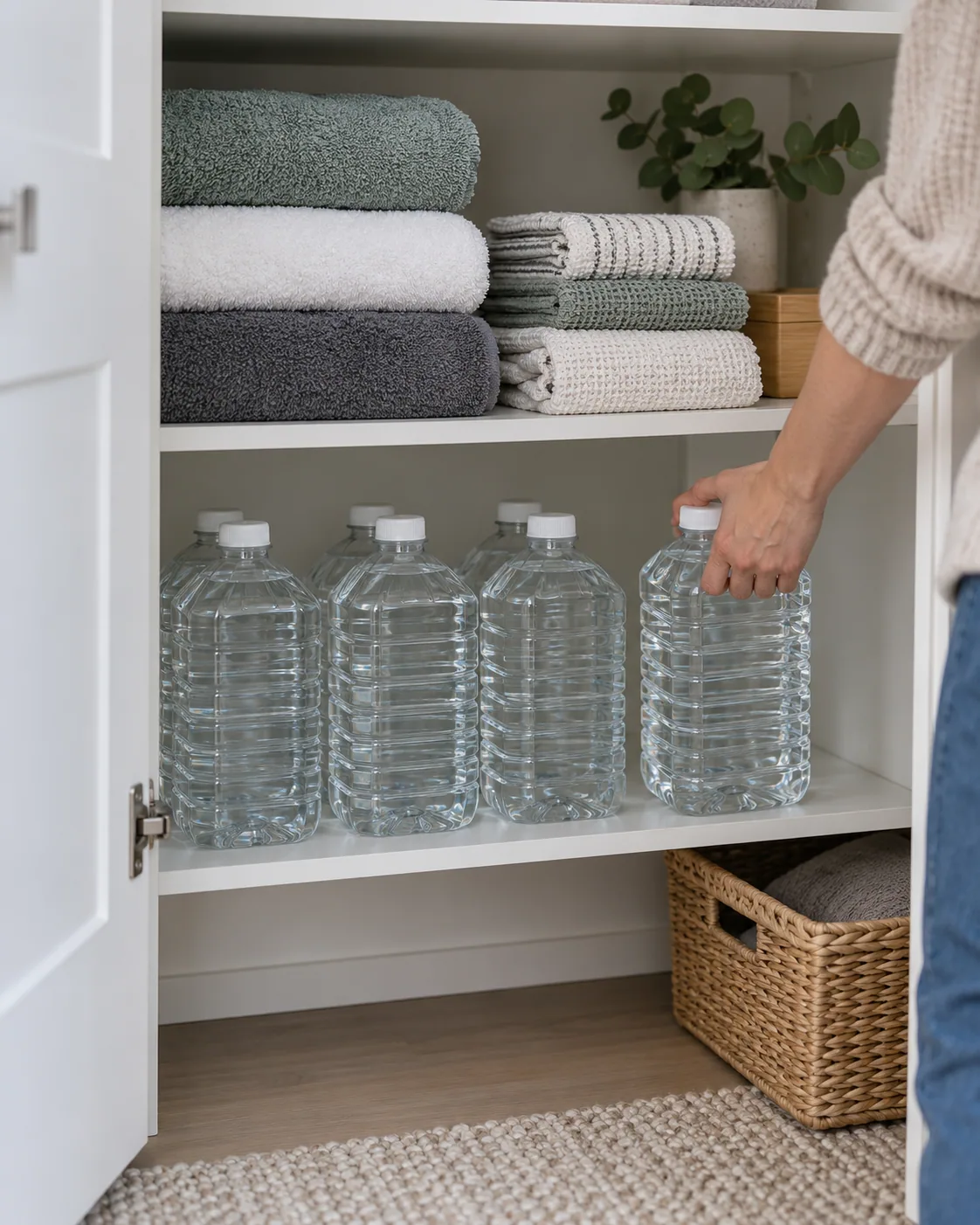
Water is the first category in the Ready Check because it is essential, heavy and easy to underestimate.
The number is not identical across every Australian source or situation.
Get Ready Queensland currently says to pack at least 10 litres of drinking water per person as a minimum for three days. Some of its other guidance uses four litres per person per day in travel or remote contexts. Local councils and state programs can recommend different durations, especially where a household may be isolated.
Start with the right question
Do not ask only, “How many bottles?”
Ask:
- How many people are in the household?
- Are there pets?
- Is this drinking water only?
- Does food preparation need extra water?
- Could local conditions make isolation longer?
- Can everyone safely lift and access the containers?
- Where can the weight be stored safely?
Check the current guidance for your state, territory and local risks.
Drinking is not the whole demand
The published minimum may focus on drinking water. Cooking, basic hygiene, cleaning and pets can increase demand.
Hot weather, pregnancy, illness, physical work and some medical needs can also change what is appropriate. Seek professional advice where health requirements are involved.
Containers matter
Use food-grade containers intended for water. Follow manufacturer directions for cleaning, filling, storage and replacement.
Store water in a cool, protected place away from chemicals and direct sunlight. Keep it accessible. A reserve behind a pile of heavy furniture is not very useful.
Large containers are space-efficient but hard to move. Smaller containers are easier to lift but use more packaging and shelf space.
Our practical suggestionUse a mix that suits the household. Write the review date on a card beside the reserve rather than relying on memory.
Do not wait for the warning
Buying a large amount of bottled water during a warning adds pressure to shops and does not help with an unexpected outage.
Build the reserve gradually. Add a manageable container during normal shopping, then stop when the household target is met.
What if storage is genuinely tight?
Prioritise a realistic minimum and a plan. Use lower cupboards or stable storage rated for the weight. Avoid unsafe high shelves.
Water treatment products are not a substitute for understanding local contamination advice. Boiling does not remove every contaminant. Follow the specific directions issued by the water authority or health department.
The goal is boring: safe water, stored properly, checked occasionally and available before you need it.
Sources
General information only. Follow official emergency instructions. Requirements vary by household and emergency.