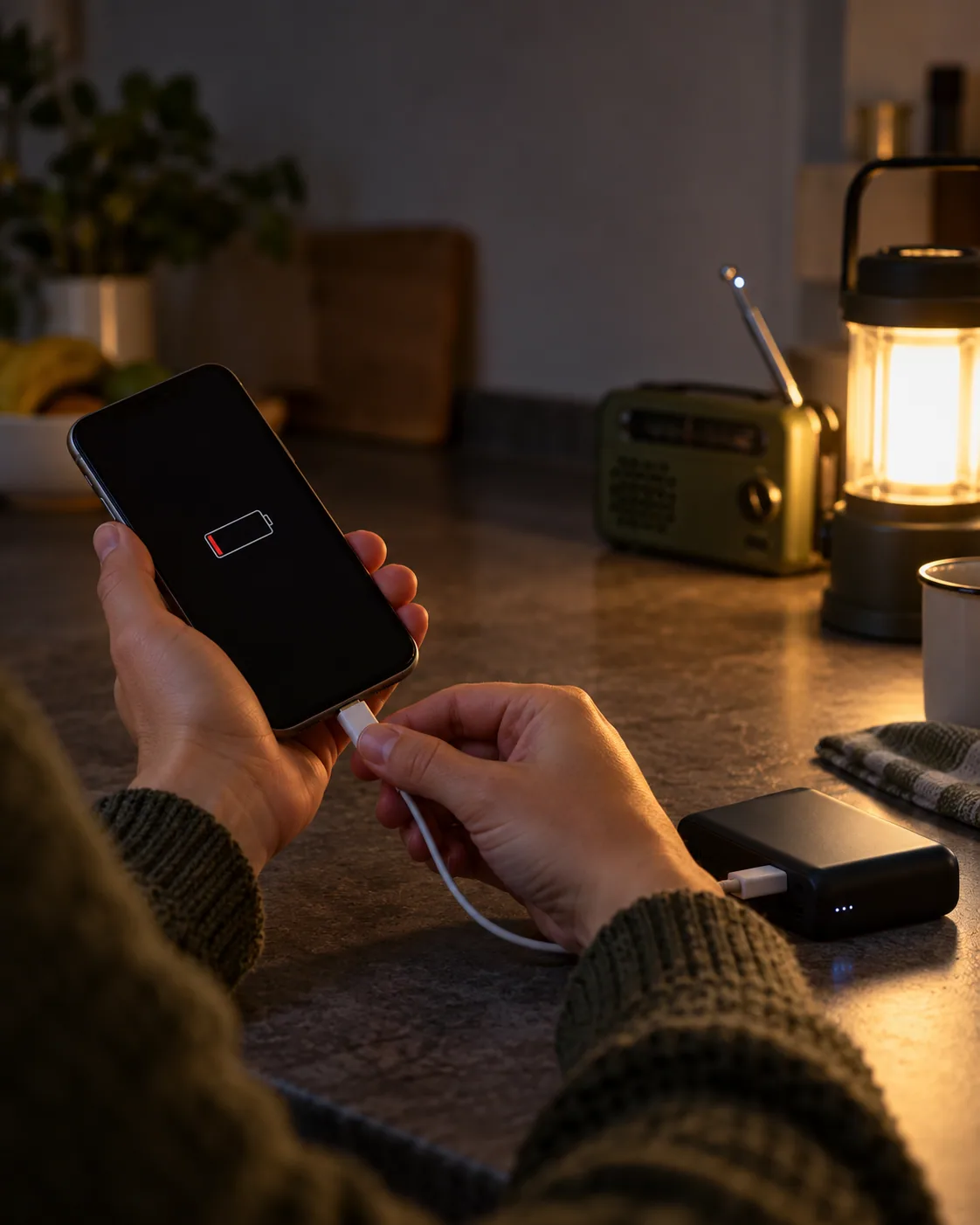
Most blackouts start as an inconvenience. The house goes quiet, the Wi-Fi disappears and everybody reaches for a phone.
A longer outage changes the job. Lighting, charging, food safety, information and any electricity-dependent medical needs become separate problems.
The first minutes
Check official outage information if mobile service is available. Look outside carefully for hazards, but stay well away from fallen or damaged powerlines. Treat them as live and report them through the relevant network or emergency channel.
Use a torch or lantern. Avoid creating a fire risk with improvised lighting.
Note the time the power failed. NSW Health specifically recommends recording it because food-safety decisions depend on time and temperature.
The first few hours
Keep refrigerator and freezer doors closed as much as possible.
NSW Health says refrigerated food will remain safe for up to four hours after a power failure under its emergency pantry guidance. Frozen food timing and safety depend on conditions. Its extended-outage page says food that no longer feels cold should be discarded and suspect food should never be tasted.
Follow current health authority advice rather than guessing.
Put phones into low-power mode. Reduce screen brightness and stop using the phone as a torch. Charge from a power bank only when useful, rather than leaving every device connected.
Use a battery or wind-up radio as another information path.
As the outage continues
The household may lose hot water, electric cooking, garage access, lifts, building pumps or some telecommunications. The exact effects depend on the property.
Check on neighbours who may need help, without taking unsafe risks. If someone relies on powered medical equipment or temperature-sensitive medicine, use their established continuity plan and contact the appropriate provider or health professional.
NSW Health advises people to speak with a pharmacist about emergency storage for refrigerated medicines. Different products have different requirements. Do not improvise from a generic list.
Food and carbon monoxide
Use safe, approved appliances only. Never use outdoor cooking or fuel-burning equipment indoors or in an enclosed area. Carbon monoxide has no useful warning smell and can be fatal.
When in doubt about food safety, use current state health or food-authority guidance and discard unsafe food.
A practical blackout box
Our practical suggestionKeep these together:
- two tested lighting options
- spare batteries that fit them
- a charged power bank and cables
- a battery or hand-crank radio
- a written contact list
- the household’s medication and medical-device continuity plan
- a manual can opener
- a simple fridge and freezer safety note from an official source
That is enough to turn the first hour from fumbling into a sequence of known actions.
Sources
General information only. Follow official emergency instructions. Requirements vary by household and emergency.